Quick answer: A good cap rate for rental property in Clarksville, TN is often around 6%–9%, depending on the property type, condition, location, tenant quality, vacancy risk, and operating expenses. A lower cap rate may reflect a newer or more stable property, while a higher cap rate can signal stronger income potential but also higher risk.
Cap rate, short for capitalization rate, helps rental property investors compare income-producing properties without factoring in financing. It is useful for evaluating Clarksville rental homes, small multifamily properties, and other real estate investment opportunities.
This guide explains how cap rate works, how to calculate it, what affects cap rates in Clarksville, and how rental owners can use cap rate alongside cash flow, appreciation potential, and property management quality when evaluating an investment.
What Does Cap Rate Mean in Real Estate?
Cap rate stands for capitalization rate. It measures a rental property’s annual net operating income compared to the property’s value or purchase price.
In simple terms, cap rate tells investors how much income a property may produce relative to what the property is worth. It is one of the most common ways to compare rental properties because it focuses on income and value, not the buyer’s mortgage terms.
For example, an investor comparing two rental homes in Clarksville can use cap rate to quickly understand which property may produce stronger income relative to price. However, cap rate should never be the only number used to make an investment decision.
How to Calculate Cap Rate for a Rental Property
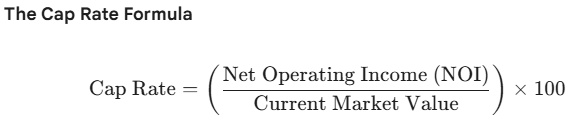
The basic cap rate formula is:
Cap Rate = Net Operating Income ÷ Property Value × 100
Net operating income, or NOI, is the annual rental income left after operating expenses are subtracted. Operating expenses may include property taxes, insurance, maintenance, vacancy allowance, property management fees, utilities paid by the owner, and routine repairs.
Mortgage payments, loan interest, principal payments, and income taxes are not included in NOI for cap rate calculations.
Cap Rate Example for a Clarksville Rental Property
Here is a simple example:
- Annual rental income: $24,000
- Annual operating expenses: $6,000
- Net operating income: $18,000
- Property value: $300,000
Using the formula:
$18,000 ÷ $300,000 × 100 = 6%
In this example, the rental property has a 6% cap rate. Whether that is good depends on the property’s condition, neighborhood, rent stability, vacancy risk, tenant quality, maintenance needs, and the investor’s overall strategy.
What Is a Good Cap Rate in Clarksville, TN?
A good cap rate in Clarksville depends on the type of rental property and the investor’s risk tolerance. As a general guide, many residential rental investors may view a 6%–9% cap rate as reasonable for Clarksville rental properties.
Here is a simple way to think about it:
- 5%–6% cap rate: May indicate a newer, lower-risk, or better-located rental property with stronger tenant demand.
- 6%–9% cap rate: Often considered a balanced range for many rental homes, depending on condition and expenses.
- 9%+ cap rate: May show stronger income potential, but investors should look closely for higher vacancy risk, deferred maintenance, older systems, or location concerns.
A higher cap rate is not automatically better. Sometimes a high cap rate means the property has more risk, more repairs, weaker demand, or less predictable income. A lower cap rate may still be attractive if the property is in better condition, has stronger long-term demand, or offers better appreciation potential.
Why Clarksville Rental Property Cap Rates Vary
Clarksville is not one single rental market. Cap rates can vary by neighborhood, property age, property type, tenant demand, and proximity to major employment or military-related demand drivers.
Cap rates may differ between areas such as central Clarksville, Sango, St. Bethlehem, Woodlawn, Fort Campbell-area neighborhoods, and other parts of Montgomery County. For broader local context, review our Clarksville rental market trends report.
Investors should compare similar properties in similar locations instead of comparing every rental property across the city as if they were the same.
Factors That Affect Cap Rate in Clarksville
Several factors can raise or lower the cap rate for a rental property.
Property Condition
A rental home with newer systems, fewer repair needs, and strong curb appeal may have a lower cap rate because buyers see it as more stable. A property needing repairs may show a higher cap rate on paper, but the investor may face higher maintenance costs after purchase.
Location
Location affects rent, vacancy, tenant demand, and long-term resale value. Properties closer to schools, shopping, commuter routes, Fort Campbell access, and strong residential neighborhoods may attract more consistent demand.
Learn more about the local service area on our Clarksville property management page.
Rental Income
Higher rent can improve NOI and increase cap rate, but only if the rent is realistic for the market. Overpricing a rental can increase vacancy, which may reduce the property’s actual return.
Operating Expenses
Expenses such as property taxes, insurance, repairs, lawn care, utilities, vacancy, and management fees directly affect NOI. A rental with high expenses may have a lower cap rate even if the rent looks strong.
Vacancy Risk
Vacancy can quickly reduce actual returns. A rental property that sits empty for multiple weeks or months may perform worse than its projected cap rate suggests.
Tenant Quality
Qualified tenants can help reduce late payments, lease violations, property damage, and turnover. Strong tenant placement and screening can support more stable rental income.
Does Cap Rate Include Mortgage Payments?
No. Cap rate does not include mortgage payments or financing costs. It measures the property’s income performance before debt service.
This makes cap rate useful for comparing properties because every buyer may have different financing terms. One investor may use a large down payment, while another may use more leverage. The cap rate allows both investors to evaluate the property’s operating performance before considering loan structure.
However, investors should still calculate cash flow after mortgage payments. A property can have a reasonable cap rate but still produce weak cash flow if financing costs are too high.
Cap Rate vs. Cash Flow vs. ROI
Cap rate is helpful, but it is not the full investment picture. Investors should also compare cash flow, cash-on-cash return, ROI, appreciation potential, and risk.
- Cap rate: Measures NOI compared to property value.
- Cash flow: Measures money left after operating expenses and debt payments.
- Cash-on-cash return: Measures return based on the investor’s actual cash invested.
- ROI: Looks at total return, which may include income, appreciation, and equity growth.
For many Clarksville investors, cap rate is a starting point. The next step is to review actual rent, expenses, repair needs, financing, and long-term goals.
How Property Type Impacts Cap Rate
Different property types can produce different cap rates. A single-family rental may not perform the same as a duplex, small multifamily property, or larger apartment building.
Single-family rentals may offer stronger tenant demand and resale flexibility, while multifamily properties may provide multiple income streams. However, multifamily properties can also involve more maintenance, tenant turnover, and management complexity.
Investors should compare property types carefully and avoid assuming the highest cap rate is always the best opportunity.
How Property Management Can Affect Cap Rate
Property management can influence a rental property’s actual performance. While property management fees are an operating expense, professional management can help protect income and reduce avoidable losses.
Good property management can support cap rate performance through:
- Better rental pricing guidance.
- Stronger property marketing.
- Tenant screening and placement.
- Reduced vacancy time.
- Maintenance coordination.
- Lease communication.
- Rent collection support.
- Owner reporting.
If you own or plan to buy a rental property in Clarksville, learn more about our landlord property management services.
How to Estimate Net Operating Income
To estimate NOI, start with gross annual rent and subtract realistic operating expenses. Do not rely only on best-case numbers from a listing.
Common expenses to estimate include:
- Property taxes.
- Insurance.
- Repairs and maintenance.
- Vacancy allowance.
- Property management fees.
- Lawn care or landscaping.
- Utilities paid by the owner.
- HOA dues, if applicable.
- Licensing, compliance, or administrative costs.
Investors should use realistic numbers rather than optimistic assumptions. Underestimating expenses can make a property look better on paper than it will perform in real life.
Common Cap Rate Mistakes Investors Should Avoid
Cap rate is useful, but it can be misleading when investors use incomplete or unrealistic numbers.
Avoid these common mistakes:
- Using gross rent instead of NOI: Cap rate should use net operating income, not total rent collected.
- Ignoring vacancy: Even strong rental markets can have turnover or downtime.
- Underestimating repairs: Older homes may need more ongoing maintenance.
- Forgetting management costs: Professional management should be included as an operating expense.
- Comparing different property types: A single-family home and a small apartment building may have different risk profiles.
- Assuming high cap rate means better deal: Higher returns often come with higher risk.
How to Use Cap Rate When Buying a Rental Property
Cap rate should be part of the due diligence process, not the whole decision. Before buying a rental property, investors should compare the cap rate with condition, location, rent comps, vacancy, repairs, tenant demand, and financing.
A smart investment review may include:
- Estimate realistic market rent.
- Calculate annual operating expenses.
- Estimate vacancy and maintenance reserves.
- Calculate NOI.
- Divide NOI by purchase price or current value.
- Compare similar Clarksville rental properties.
- Review cash flow after financing.
- Consider long-term appreciation and exit strategy.
If you are still researching the market, you may also want to review our guide to houses for rent in Clarksville, TN to understand local rental demand and renter expectations.
Need Help Evaluating a Clarksville Rental Property?
Cap rate can help you compare rental properties, but the real performance of a rental depends on pricing, tenant quality, vacancy, maintenance, and day-to-day management.
Connerth & Co. helps Clarksville rental owners with local rental guidance, tenant placement, rent collection support, maintenance coordination, owner reporting, and property management. If you want to understand what your rental may be worth, you can request a free rental analysis.
Key Takeaways: Cap Rate and Clarksville Rentals
- Cap rate stands for capitalization rate.
- Cap rate compares net operating income to property value.
- A good cap rate in Clarksville often falls around 6%–9%, depending on risk and property quality.
- Cap rate does not include mortgage payments or financing costs.
- Higher cap rates may signal more income potential but also higher risk.
- Investors should compare cap rate with cash flow, ROI, vacancy, repairs, and appreciation potential.
- Strong property management can help protect rental income and reduce avoidable losses.
FAQs About Cap Rate for Rental Properties in Clarksville
What is a good cap rate for rental property in Clarksville, TN?
A good cap rate for rental property in Clarksville often falls around 6%–9%, depending on the property type, condition, location, rent stability, vacancy risk, and operating expenses. Investors should compare similar properties and review the full investment picture before making a decision.
How do you calculate cap rate?
Cap rate is calculated by dividing annual net operating income by the property value or purchase price, then multiplying by 100. The formula is: Cap Rate = NOI ÷ Property Value × 100.
Does cap rate include mortgage payments?
No. Cap rate does not include mortgage payments, loan interest, principal payments, or financing costs. It measures the property’s operating income compared to value before debt service.
Is a higher cap rate always better?
No. A higher cap rate may show stronger income potential, but it can also indicate higher risk, older property condition, weaker location, vacancy issues, or deferred maintenance. Investors should review why the cap rate is high before assuming it is a better deal.
Can property management improve cap rate performance?
Property management can help protect rental performance by improving pricing, marketing, tenant screening, rent collection support, maintenance coordination, and vacancy management. These factors can influence net operating income and long-term investment performance.