
Property inspections are not merely about checking for damage. They are an important part of protecting your rental asset, reducing maintenance costs, documenting property condition, and maintaining clear communication with tenants. For Clarksville rental owners, the goal is to inspect often enough to identify problems early without creating unnecessary tenant privacy concerns.
In this guide, Michael Connerth, a Licensed Professional, explains a practical inspection schedule for rental property owners. We cover how often landlords should inspect, what Tennessee owners should understand about entry and notice, and what Connerth & Co. looks for during professional rental property inspections.
Regular inspections can help protect your rental asset. Learn how we prevent property damage for our clients.
Quick Answer: How Often Should a Landlord Inspect a Rental Property?
A practical inspection schedule for many rental properties is every 3 to 6 months, depending on the property’s condition, maintenance needs, lease terms, and tenant history. Tennessee law does not prescribe a fixed number of routine inspections per year.
Before entering an occupied rental for a routine inspection, landlords should follow the lease, request the tenant’s consent, provide reasonable written advance notice, and clearly explain the date, approximate time, and purpose of entry.
Want inspections handled professionally?
Connerth & Co. helps Clarksville rental property owners with routine inspections, maintenance coordination, tenant communication, and detailed owner reporting.
Recommended Rental Inspection Schedule for Tennessee Properties
A common question among Clarksville landlords is, “How often should I check on my rental house?” The answer requires balancing reasonable property oversight with the tenant’s privacy and right to quiet enjoyment.
Connerth & Co. generally recommends considering an interior inspection every 3 to 6 months, depending on the property and tenancy. Annual inspections may be sufficient for some well-maintained, lower-risk properties, while quarterly or semiannual inspections can help identify hidden leaks, HVAC filter neglect, unauthorized pets, long-term guests, and other maintenance or lease-compliance concerns before they become larger problems.
Frequent inspections can create tenant privacy concerns when they are unnecessary, disruptive, improperly communicated, or inconsistent with the lease. The appropriate schedule should reflect a legitimate property-management purpose and the circumstances of the individual rental.
Tennessee Notice and Consent Before Entry
Tennessee does not impose a universal 24-hour notice requirement for every routine rental inspection. Under Tennessee Code § 66-28-403, tenants must not unreasonably withhold consent when a landlord requests entry for permitted purposes such as inspecting the premises or making necessary or agreed repairs.
The same statute prohibits landlords from abusing their right of access or using entry to harass a tenant. It specifically requires at least 24 hours’ notice for certain showings during the final 30 days of a tenancy when that right of access is included in the rental agreement. This should not be presented as a universal notice requirement for routine inspections.
For routine inspections, landlords should follow the rental agreement, request access in advance, provide reasonable written notice, identify the purpose of entry, and schedule the inspection for a reasonable time. Connerth & Co. may use at least 24 hours’ written notice as an operating practice, but that should be distinguished from a universal Tennessee statutory requirement.
For more information about consent, emergency entry, tenant privacy, and excessive access, read our Tennessee landlord entry and inspection rights guide.
Legal Tip: The lease should clearly explain permitted entry, communication procedures, and the property’s inspection schedule. Landlords should not assume that sending notice alone authorizes entry in every situation.
Four Useful Types of Rental Property Inspections
Rental owners in Clarksville and Montgomery County can use several types of inspections throughout a tenancy:
- Move-In Inspections: Document the property’s condition with dated photos before a new tenant takes possession. This creates a baseline for future comparisons. This is also when landlords may need to address prorated rent for a mid-month move-in.
- Routine Inspections: These are scheduled during the lease term to check safety equipment, identify water intrusion, review maintenance needs, and assess compliance with applicable lease terms.
- Exterior or Drive-By Checks: These involve observing what is normally visible from a public street. They can help identify lawn neglect, unauthorized vehicles, exterior damage, or visible maintenance concerns. A landlord should not enter the yard, walk through private areas, or look through windows without consent or another lawful basis for access.
- Move-Out Inspections: These document the property’s condition near the end of the tenancy. Landlords should follow Tennessee’s security-deposit inspection procedures, including applicable tenant inspection rights, before determining whether deductions may apply for damage beyond normal wear and tear.
What Should Be Included in a Property Inspection Checklist?
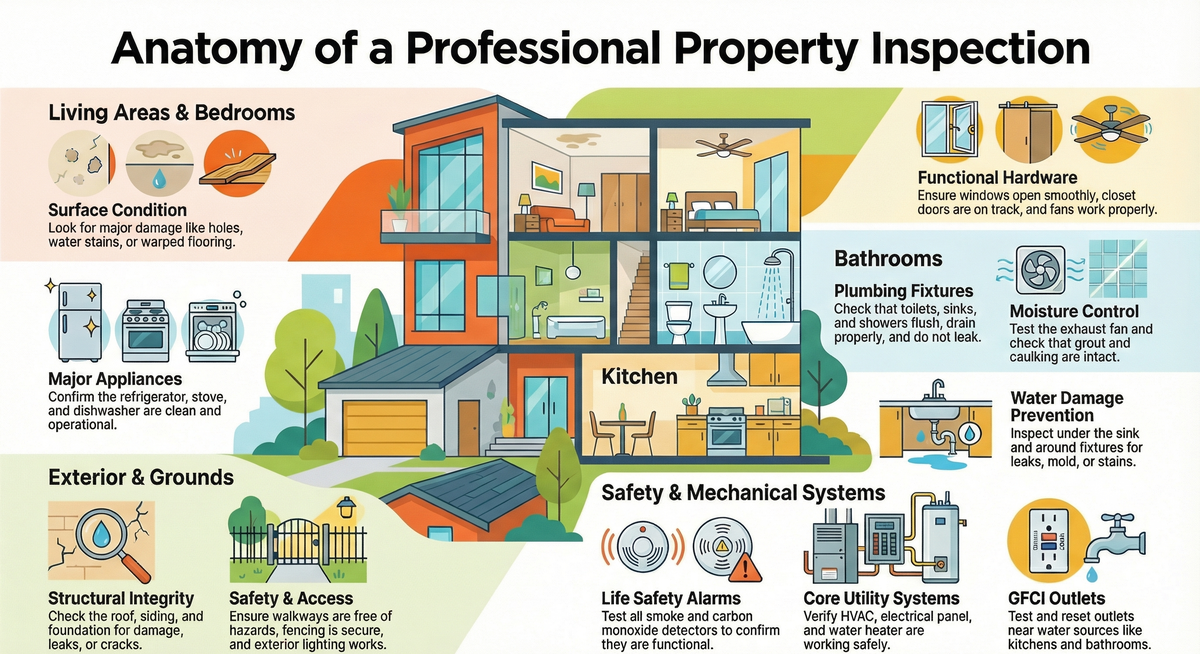
A thorough rental property inspection checklist helps ensure that important maintenance, safety, and lease-compliance items are not missed. When inspecting a rental property, consider reviewing:
- Safety Systems: Test smoke detectors, carbon monoxide alarms, and fire extinguishers where applicable.
- Water Intrusion: Check under sinks, around toilets, near tubs, and around ceilings for stains that may indicate hidden plumbing or roof leaks.
- HVAC Maintenance: Verify that filters are being changed and that the system appears to be operating properly.
- Lease Compliance: Look for evidence of unauthorized occupants, unauthorized pets, smoking, or other potential lease violations.
- Exterior and Structural Items: Examine the roofline, gutters, siding, landscaping, and other visible exterior maintenance concerns.
- Appliances and Fixtures: Check major appliances, plumbing fixtures, doors, windows, locks, and other frequently used items.
- Tenant-Reported Issues: Ask whether there are maintenance problems that have not yet been submitted through the tenant portal.
How to Give Tenants Notice of an Inspection
Clear communication can reduce friction between landlords and tenants. When requesting access for an inspection, use a professional tone and provide a reasonable time window, such as “between 1:00 PM and 3:00 PM,” rather than promising an exact minute.
The inspection request or notice should include:
- The proposed inspection date
- The approximate time window
- The reason for requesting entry
- Whether the tenant needs to be present
- Who is expected to enter the property
- How the tenant should respond or request another reasonable time
Tell the tenant whether they may be present and whether their presence is necessary for the scheduled inspection. Tenant presence and tenant consent are separate issues: the landlord should follow the lease and have a lawful basis for entry rather than assuming that notice alone authorizes access. Keep a written record of the request, notice, consent, and completed inspection.
Can a Landlord Inspect a Property Every Three Months?
A quarterly inspection schedule may be reasonable for some properties, particularly when there are older building systems, previous maintenance problems, a new tenancy, or a greater risk of deferred maintenance. However, quarterly entry is not automatically appropriate for every rental.
For stable, long-term tenants and well-maintained properties, an inspection every 6 months or another reasonable schedule may be sufficient. The frequency should reflect the property’s condition, legitimate management needs, lease terms, tenant history, and the need to avoid unnecessary disruption.
Questions About Inspection Rights?
Inspection frequency should remain reasonable and consistent with the lease. For information about consent, tenant privacy, emergency access, and excessive entry, read our Tennessee landlord inspection rights guide.
How Often Do Apartments Conduct Inspections?
Apartment communities and professional property managers may inspect units once or twice per year, while others use a quarterly schedule based on the property’s needs. Inspections may also occur before lease renewal, after maintenance requests, during scheduled service visits, or near move-out.
For single-family rental owners in Clarksville, a schedule of every 3 to 6 months may be useful because the owner is responsible for the entire property, including the exterior, landscaping, roofline, HVAC system, plumbing, and the tenant’s care of the home. The appropriate frequency should still be determined individually.
Professional Clarksville, TN Property Management
At Connerth & Co. Property Management in Clarksville, TN, we understand that regular property inspections can help identify maintenance concerns before they become costly problems. Rental owners should not have to spend their weekends coordinating access, documenting property conditions, managing repairs, and addressing potential lease violations.
Our team handles professional routine inspections for Clarksville rental owners. We provide detailed reports, photos, maintenance notes, and owner communication so clients can remain informed without personally managing every inspection.
Contact us today to learn how our property-management team can help protect your rental property.
Key Takeaways
- Frequency: Tennessee does not prescribe a fixed number of routine inspections. A practical schedule for many rentals is every 3 to 6 months, depending on the property and tenancy.
- Notice and Consent: Landlords should follow the lease, request consent, provide reasonable written advance notice, and avoid assuming that notice alone authorizes entry.
- Documentation: Move-in and move-out inspections help document property condition and manage potential security-deposit disputes.
- Lease Compliance: Routine inspections can help identify unauthorized occupants, unauthorized pets, smoking, property damage, and other potential lease concerns.
- Reasonable Access: Inspection requests should serve a legitimate purpose and should not be excessive, disruptive, or used to harass a tenant.
- Professional Management: A property management company can coordinate inspection requests, walkthroughs, reporting, tenant communication, and related maintenance.
FAQs
Q. How often can a landlord inspect a rental property?
A. Tennessee law does not set a fixed number of routine inspections per year. The frequency should be reasonable, related to a legitimate management purpose, consistent with the lease, and handled without unnecessary disruption or harassment.
Q. How often should a landlord inspect a property?
A. A practical schedule for many rental properties is every 3 to 6 months, together with appropriate move-in and move-out inspections. Some well-maintained properties may need less frequent inspections, while others may benefit from quarterly reviews.
Q. Can a landlord inspect a property every three months?
A. A quarterly schedule may be reasonable for some properties, but it is not automatically appropriate in every tenancy. The frequency should reflect a legitimate property-management need, remain consistent with the lease, and avoid unnecessary disruption or harassment.
Q. How many times can a landlord inspect a property?
A. Tennessee law does not establish a fixed annual number. Inspection frequency should be reasonable and connected to property care, maintenance, safety, or lease compliance. Repeated unnecessary inspections may create tenant privacy concerns and could be considered an abuse of access.
Q. How often do apartments conduct inspections?
A. Some apartment managers conduct inspections once or twice per year, while others use quarterly schedules based on property needs. Move-in, renewal, maintenance-related, and move-out inspections may also occur.
Q. Do I need to notify tenants before conducting a drive-by inspection?
A. Observing what is normally visible from a public street generally does not involve entering the rental premises. However, a landlord should not enter the yard, walk through private areas, or look through windows without consent or another lawful basis for access.
Q. Can a tenant legally refuse an inspection in Tennessee?
A. Tennessee law states that tenants must not unreasonably withhold consent when a landlord requests entry for permitted purposes, including an inspection. Whether a refusal is unreasonable can depend on the purpose, timing, lease terms, communication, and circumstances. Landlords should document any refusal and use the lease and appropriate legal process rather than forcing entry.
Q. What happens if I find an unauthorized pet during an inspection?
A. Document the issue with photographs and written notes, then review the lease before communicating with the tenant. Any notice, fee, corrective action, or other response should be authorized by the lease and applicable law.
Q. What should be included in a rental property inspection checklist?
A. A rental property inspection checklist may include smoke detectors, carbon monoxide alarms where applicable, plumbing leaks, HVAC filters, appliances, walls, flooring, exterior conditions, landscaping, potential lease violations, and tenant-reported maintenance concerns.
Q. Can Connerth & Co. Property Management handle inspections for me?
A. Yes. Our Clarksville property-management team provides inspection support for rental owners, including tenant communication, walkthroughs, condition documentation, maintenance notes, and owner reporting.
This article provides general information for Tennessee rental owners and tenants and does not constitute legal advice. Inspection rights can depend on the lease, property location, and specific circumstances. Consult a Tennessee attorney regarding a disputed entry request or individual legal situation.